Home / Guides
How to Start in Data Science: A Realistic Roadmap
Most beginners lose months to the same mistake: collecting courses instead of finishing projects. Here is a plan that keeps you moving and keeps the spending small.
Step 1: spreadsheets and basic stats (weeks 1-3)
Learn what a mean, median, and standard deviation tell you, and why averages lie when data is skewed. If you can build a pivot table and a sensible chart, you already do real analysis.
Step 2: SQL (weeks 3-6)
SQL is the most reliably useful skill on the list. Almost every analyst job touches a database. Practice joins, grouping, and window functions until they feel boring. See our SQL book picks.
Step 3: Python or R (weeks 6-12)
Pick one. Python has the wider job market and plays well with everything; R is lovely for statistics and charts. Not sure? Read Python vs. R. Learn to load a file, clean it, summarize it, and plot it before touching machine learning.
Step 4: a little machine learning (weeks 12-20)
Start with linear and logistic regression, then trees. Learn to split data into train and test sets. Understanding overfitting matters more than knowing every algorithm.
Step 5: build three small projects
Pick data you care about: your city's open data, sports stats, your own spending. Write up what you asked, what you found, and what you would check next. Three honest write-ups beat ten certificates. Details in the book list and the course guide.
Do you need fancy hardware?
No. A laptop with 16 GB of memory handles nearly every beginner project. Our RAM guide explains when to want more, and the GPU guide explains why you probably do not need one yet.
Picks that fit this guide
Photos and links go to Amazon. Check the current price, edition and seller there.
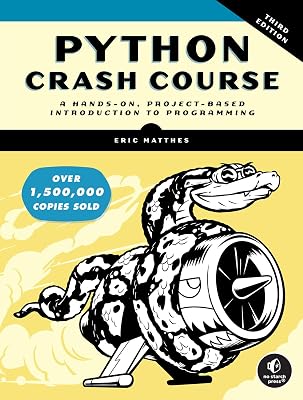
Python Crash Course, 3rd ed.
New to code? Start here, then move on to data libraries.
Check it on Amazon →
Python for Data Analysis, 3rd ed.
By the creator of pandas. The standard guide to cleaning, reshaping and summarizing data in Python.
Check it on Amazon →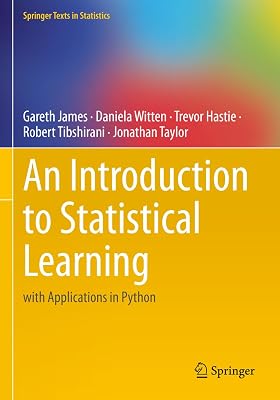
An Introduction to Statistical Learning (with Python)
Clear, visual introduction to statistical learning with Python labs.
Check it on Amazon →
Learning SQL
Gentle, thorough path from SELECT to joins, subqueries and grouping.
Check it on Amazon →Want the full wall of picks, sorted by type? Browse all Top Picks →